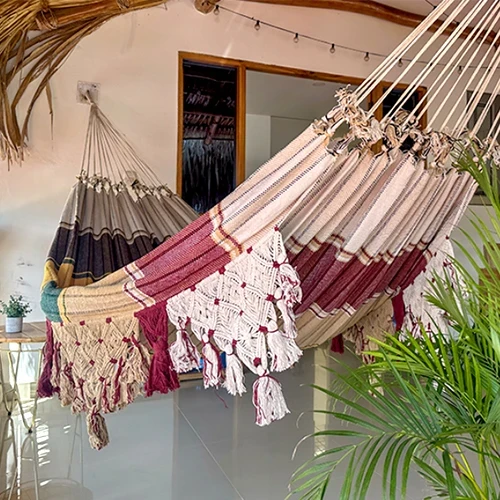
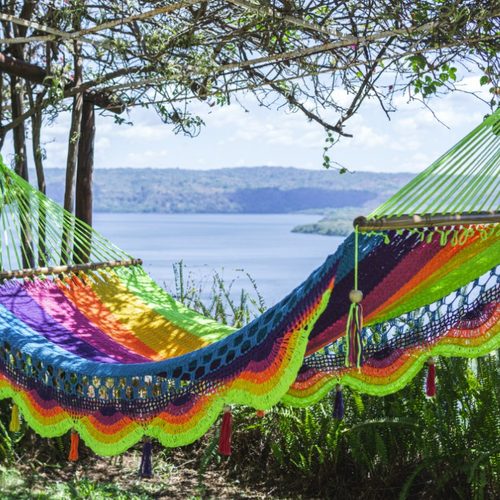
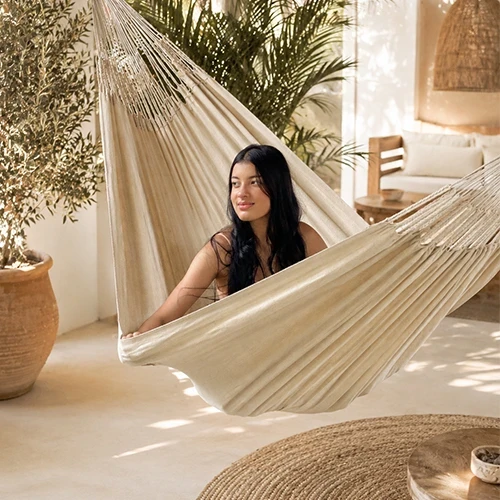
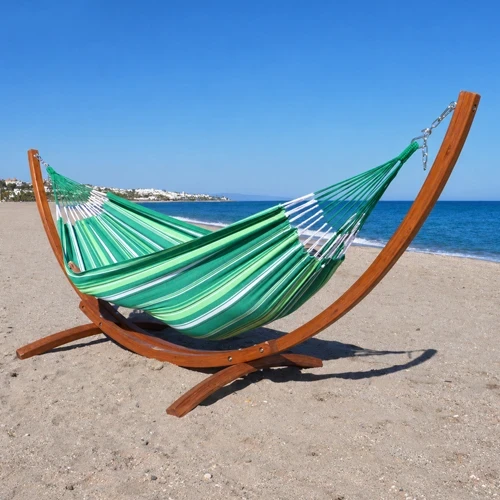
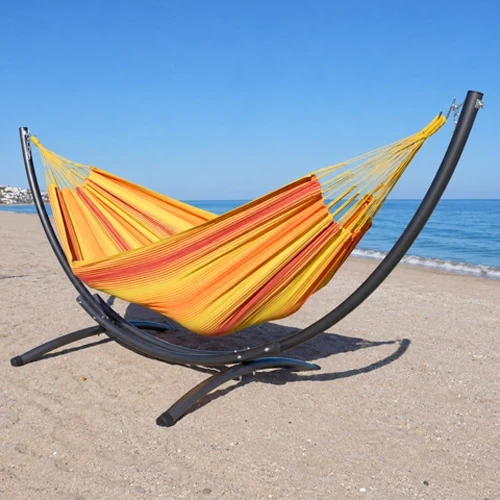
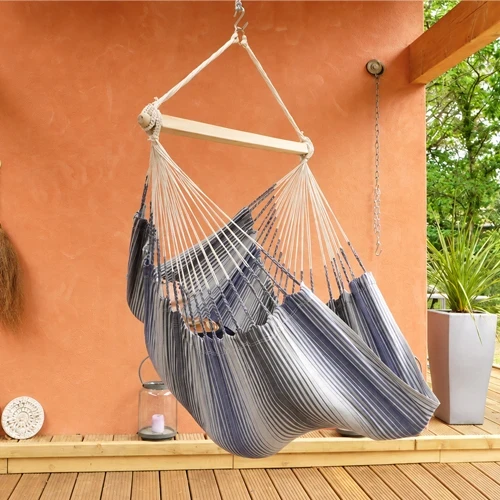
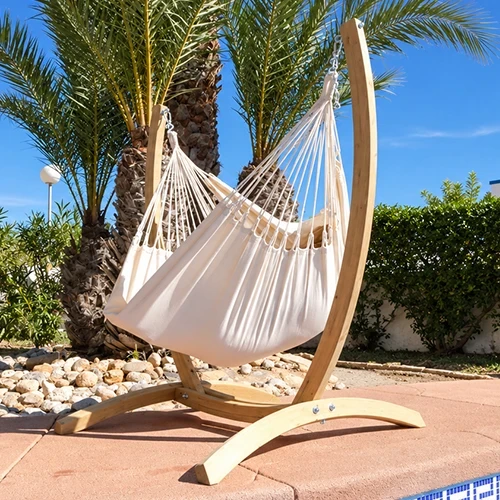
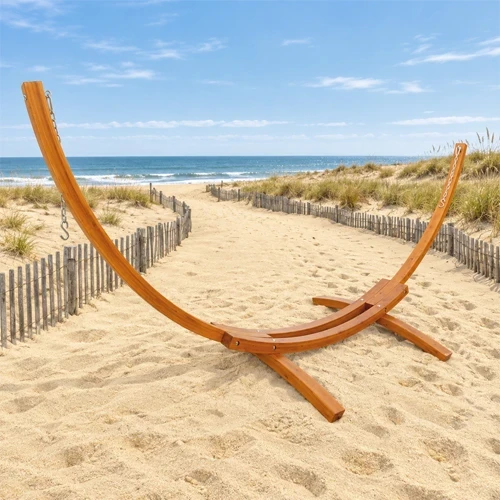




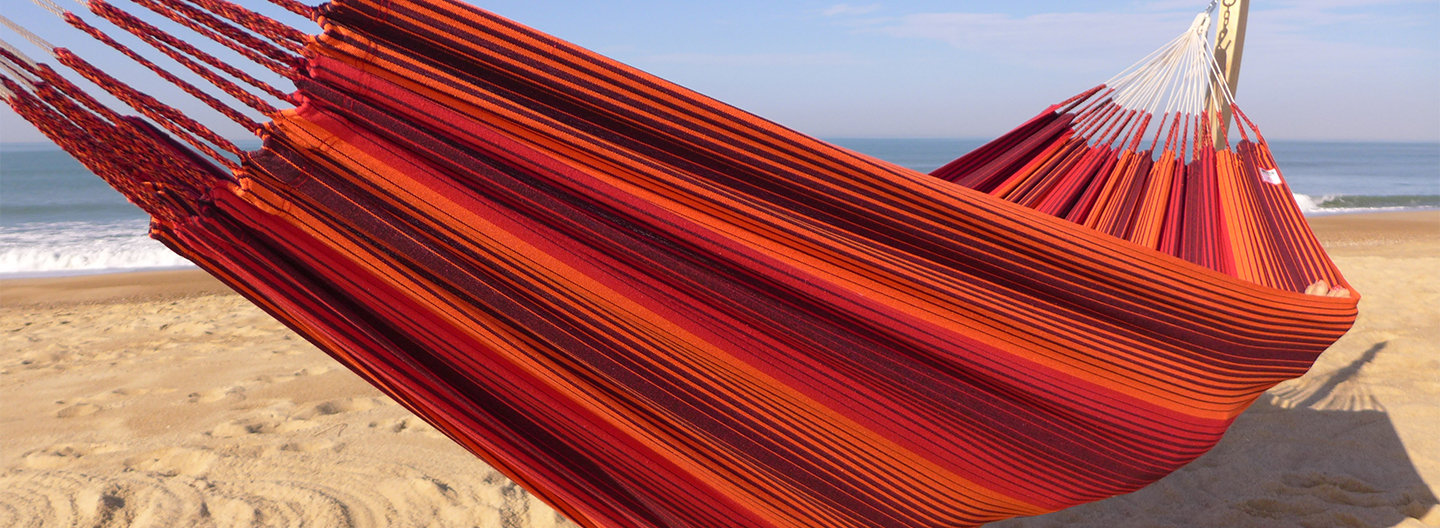
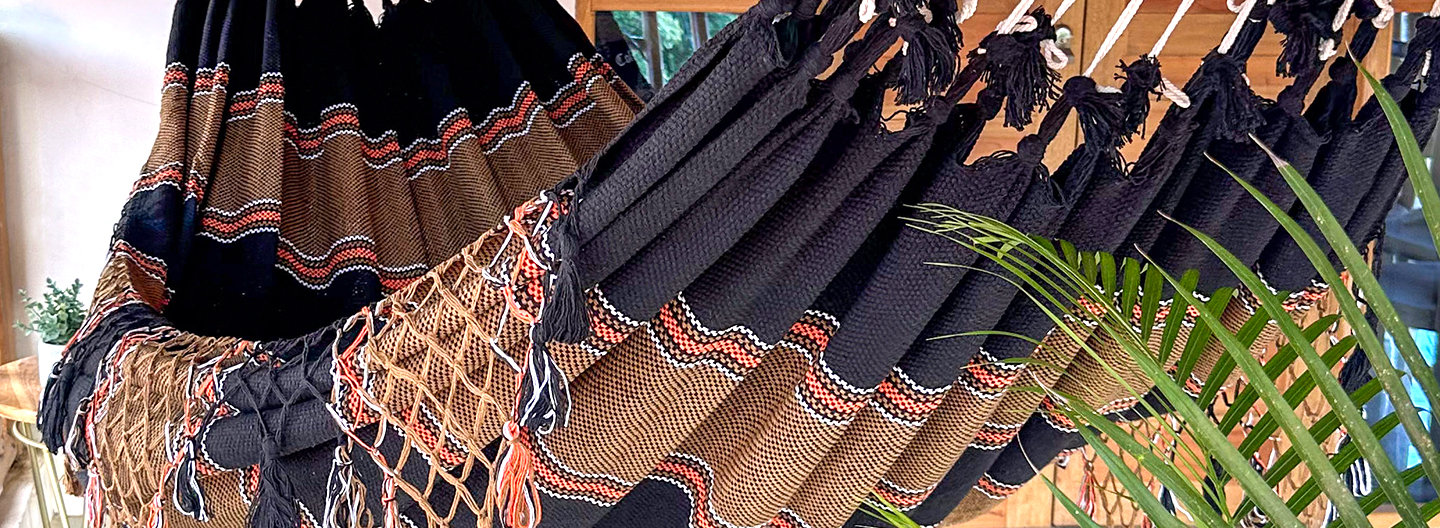


It all began in 1988, when Franck Jouret, who had a passion for surfing and craftsmanship, discovered the traditional hammock during a trip to Tixtla, Mexico.
Won over by its comfort and the skill of the artisans who make it, he decided to introduce people in France to this different way of relaxing. Tropical Hamac then began working directly with artisans in Latin America’s major hammock-producing countries.
Today, our hammocks come from Colombia, Brazil, Nicaragua, Mexico and Venezuela. Each country has its own techniques, materials, colours and hammock culture.
Over the years, we have built relationships of trust with our artisans and suppliers, some of which have lasted for decades.
A handcrafted hammock is not an industrial product: slight differences in colours or finishes can occur, and these also make each piece unique.
In 2025, after more than three decades of developing Tropical Hamac, Franck handed the company over to Michaël.
The story continues with new projects, new collections and one goal: to move Tropical Hamac forward without losing its soul, while keeping this direct link with Latin America and the people who make our products.
Since 1988, many things have changed. But our wish remains the same: to introduce you to the hammock as it is enjoyed in Latin America, as a true way of life.
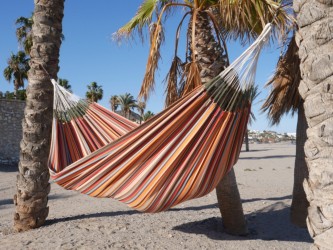
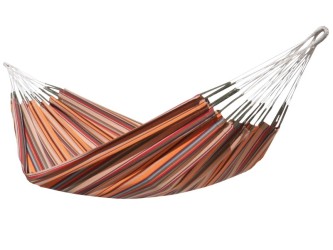
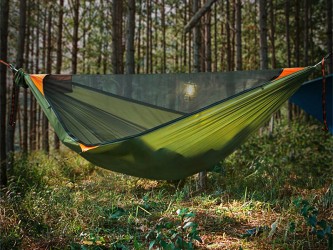
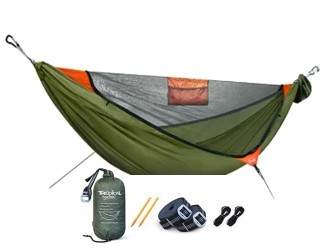
A philosophy, a history and a culture
For us, the hammock is a philosophy, a history and a culture all at once. It is the story of the discovery of an object that remained largely unknown in Europe for a long time, originating in Latin America and brought back as a curiosity. It is also the story of craftsmanship and production methods that vary from country to country, much like wine does from one region to another.
An ancient and living tradition
The hammock is part of a culture, with its own rituals and legends. It represents craftsmanship that has been refined and passed down from generation to generation. A cultural tradition that has made this object, more than a thousand years old, an everyday sleeping place for millions of Latin Americans, from Amazonian tribes and rural communities in Mexico to the cities of Colombia.
Traditional craftsmanship
It is an art passed down through gestures and skilled hands: from mother to daughter, from one neighbour to another. It is also a thriving economy that provides a livelihood for tens of thousands of artisans throughout the continent.
A national symbol in several countries
A symbol of Mexico with the Mexican hammock, of Colombia with its Wayuu hammocks, and of Nicaragua with its famous spreader-bar hammocks, each country considers the hammock a true national treasure – and rightly so, given the quality of the products they produce.
A true philosophy of life
Beyond the object itself, the hammock also represents a philosophy of life. Sleeping, relaxing or simply lying in a hammock is a way to slow down, unwind and enjoy life at a gentler pace. Its gentle rocking brings us back to familiar, almost childhood sensations: that soft swaying motion that invites relaxation and a sense of lightness.
Hammock lovers
Our customers prove it to us every day: hammock lovers often share the same qualities – patience, kindness and an appreciation for life’s simple pleasures.
What size, material and stand suit you best? Whether you’re hanging your hammock indoors or outdoors, our guides will help you choose the right model for your space and how you plan to use it.
Net or fabric? With wooden bars? For baby? All our tips to find the ideal hammock.
Hanging, outdoor use, comfort… Our recommendations for a simple and lasting installation.
Durable, responsible, and handcrafted hammocks. Discover our expertise and materials.
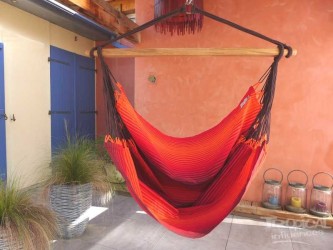
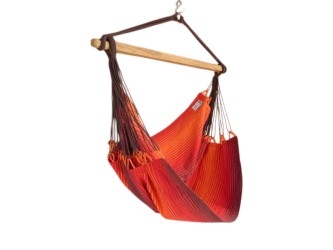 -7%
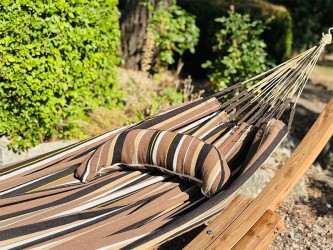
Can't find the answer you're looking for? Our team is available Monday to Friday from 9 AM to 6 PM.
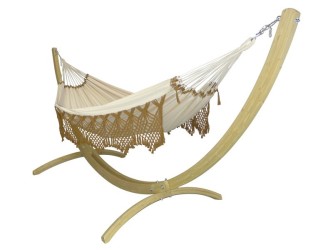
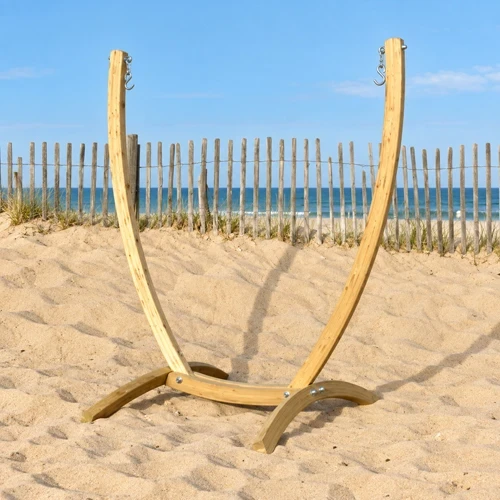
Contact usOur L hammocks fit perfectly with our L stands, such as the Latino L wooden stand or the Inka Relax L metal stand.
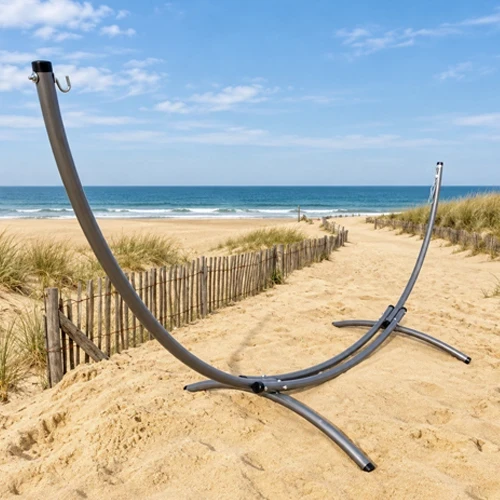
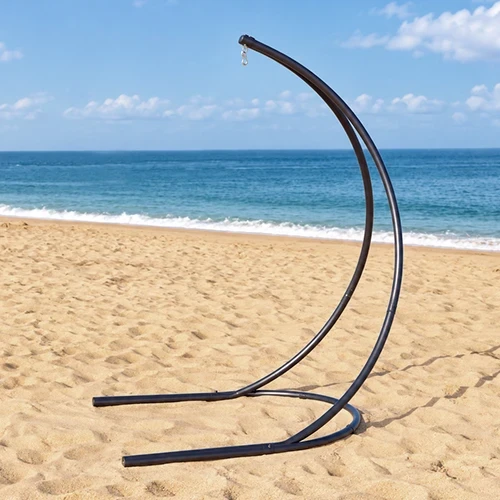
The XL and XXL hammocks are suitable for our XL or XXL stands, such as the Latino XL wooden stand, the Inka Relax XL metal stand, or the Azteka XL.
For our luxury hammocks, the choice of stand depends on the model’s dimensions. Contact us before your purchase to check compatibility.
Spreader-bar hammocks require a suitable stand: they are not compatible with our metal stands. For a wooden stand, we can advise you based on the model and its dimensions.
Not always. We recommend contacting us before your purchase to check the compatibility between the hammock and the stand.
If you already have a hammock, we can guide you to the most suitable stand.
- Up to 1.70 m: L fabric hammock (140 cm wide)
- Up to 1.80 / 1.85 m: XL fabric hammock (160 cm wide)
- Over 1.80 / 1.85 m: XXL or XXXL fabric hammock (from 180 cm wide)
- For two or more people: Size XXL or XXXL from 180 cm wide.
The canvas hammock is the most common in families because it is ultra-robust and resists tears well (especially from children). It is also easier to use and maintain, as it can be machine washed more easily than a net hammock or a bar hammock.